Gardens―
Quiet the mind.
Find harmony
with nature's
changing seasons.
Kirishima azaleas glow
Autumn leaves blaze
Winter wraps all in white
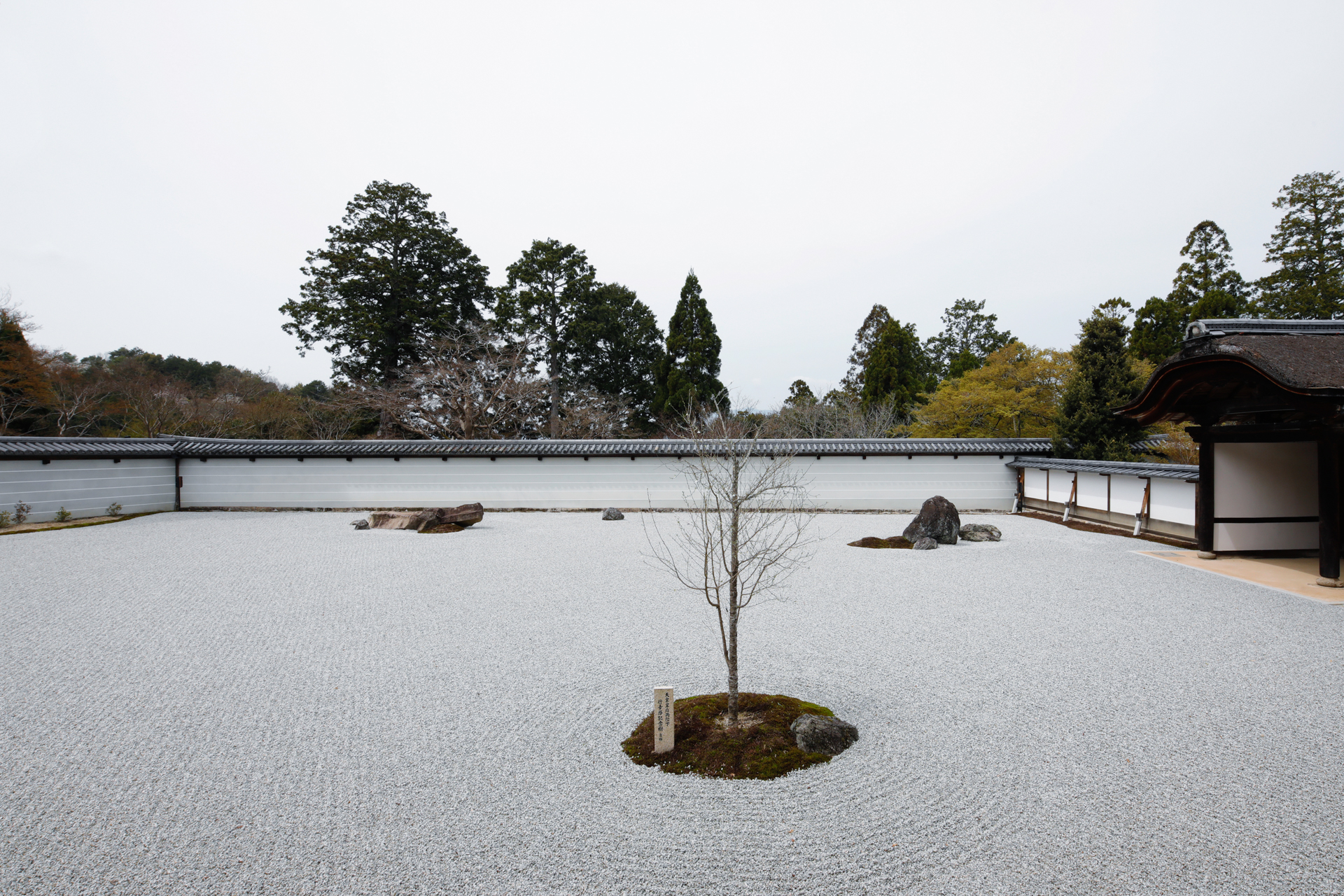
Moki Fuboku Garden
A dry landscape garden in the style favored by Kobori Enshu extends before the O-shoin.
Tsuru-shima, the Crane Island, and Kame-shima, the Tortoise Island, rise from raked sand symbolizing flowing water.
The Ko-shoin evokes a roofed pleasure boat quietly making its way upstream.
A 400-year-old Japanese white pine on Tsuru-shima represents a crane.
At its base stands a Manshuin-style Kirishitan lantern, associated with Japan's hidden Christians.
The composition reflects Imperial Prince Ryosho's refined courtly taste.


Shoin Garden
Kirishima azaleas grow around the O-shoin,
opening their deep crimson flowers in early May.
Native to Miyazaki Prefecture, Kirishima azaleas
bear flowers slightly smaller than those of other azaleas.
Their graceful appearance has been likened to a beautiful woman.
When the blossoms spread like a red carpet,
they form an especially beautiful harmony with the dry landscape garden.
Camellias, plum trees, Somei-yoshino cherry trees, crape myrtles,
Japanese gentians, and sasanqua camellias also bloom through the seasons.
Manshuin is also renowned for its autumn foliage.


The Kokin denju was an oral transmission of closely guarded teachings on the interpretation, recitation, and meaning of poems in the Kokin Wakashu. Katsura Imperial Villa and Manshuin are said to embody this esoteric literary spirit in the forms and spatial composition of their architecture and gardens.